
Causes & Care for Alopecia Areata (Patchy Hair Loss)
Alopecia areata (patchy hair loss) is a form of hair loss in which a large amount of hair falls out within a very short time, resulting in bald patches. One or more circular, hairless areas form, which can spread further without appropriate care and support. The severity of hair loss varies among those affected.
In this article, you will learn how to recognise alopecia areata, what causes it may have, and what care options are available. We also show how our natural hair care products can support this sensitive hair concern.
What is circular hair loss and what are its symptoms?
Find out about alopecia areata and what symptoms the disease causes.
Learn more
What are possible causes of circular hair loss?
Find out what causes circular hair loss and how it occurs.
Learn more
Is there any therapy or treatment for circular hair loss?
Find out how alopecia areata is treated by conventional medicine and when it makes sense to see a doctor about it.
Learn more
How can YELASAI care products help you with circular hair loss?
Find out how YELASAI's natural hair care products can also be used for circular hair loss and care for your scalp and hair.
Learn more
Alopecia Areata – Symptoms
In people affected by circular hair loss (Alopecia areata), round, bald patches form on the head. The hair falls out in strong phases starting from the center, forming circles. This often affects not only the scalp hair: it is not uncommon for the beard, eyebrows, eyelashes, and other body hair to fall out as well.
From many experience reports of circular hair loss, it is evident that round or oval, sometimes completely bald spots form. These areas of the body are typically smooth and show increased forms of secretions at the pores of the hair follicle openings.
Erfahrungsbericht
Pflegeverlauf
Who is affected by circular hair loss?
Alopecia areata (patchy hair loss) occurs in men and women at any age. Both adults and children can be affected, with young adults appearing to have a particularly high risk. Many people are affected by this form of hair loss during their lifetime: approximately one to two in 100 people experience alopecia areata over the years. Men are affected by alopecia areata somewhat more frequently than women.
How does circular hair loss occur?
The progression of alopecia areata follows a fixed pattern only to a limited extent and is therefore difficult to predict. As a rule, massive hair loss occurs within a very short time, causing round bald patches to become visible on the scalp or another affected area.
In many cases, alopecia areata heals on its own. It simply stops after a while and the hair starts to grow again. When the hair regrows, however, changes can occur. In some people, the hair is initially white or colourless before it takes on its usual hair colour.
Alopecia areata manifests identically in men and women of different age groups. Basically, experience reports on alopecia areata show that the prognosis for recovery is significantly better at a young age than in adults.
Possible Causes of Alopecia Areata
For successful management of alopecia areata, it is first important to identify the exact cause. However, there is a problem: research has not yet been able to clearly determine why alopecia areata occurs.
However, there are some possible triggers that are discussed from a medical perspective:

Autoimmune diseases
According to current research, it is considered likely that alopecia areata is due to inflammatory reactions in a possible autoimmune disease. In this case, the body's own defense mechanisms turn against the hair cells. As a result, the hair roots are weakened and hair loss occurs.

Genetic predisposition
Reports from those with alopecia areata show that there can be a familial clustering. This is the case in about 10 to 25 percent of those affected.

Atopic diseases
Alopecia areata often occurs together with atopic conditions. These include neurodermatitis, hay fever and dust mite allergies. Long-term use of cortisone could play a role here.

Stress
Through accompanying people, it has been found that various life experiences can promote alopecia areata. Examples include sudden separations, fear of separation, existential fears and other stress-triggering situations and events.
Currently, the medical theory that alopecia areata is an autoimmune reaction is considered most likely. In this case, the immune system attacks not only viruses and bacteria. It can also fight the body itself. The hair roots are attacked, causing growth to come to a standstill. The roots enter a kind of dormant state, causing the hair to fall out.
Management of Alopecia Areata
In cases of first signs or mild forms of alopecia areata, it is advisable to wait and observe the development of the hair situation. In such cases, it may already be beneficial to care for the scalp and hair with mild care products.
However, if the alopecia areata is very concerning, we recommend consulting a dermatology specialist. They can initiate appropriate examinations and perform various tests to rule out, for example, that the immune system could be responsible for the hair loss.
In most people, alopecia areata resolves on its own after six to twelve months. If this is not the case, doctors usually rely on the following strategies and medications:

cortisone
For many affected individuals, ointments containing cortisone are used. The active ingredient is intended to stimulate hair growth and thus make the bald patches disappear. Local injection of cortisone is also an option.

Minoxidil
The substance is used for various forms of hair loss. It increases blood circulation to the scalp and is thus intended to boost hair growth.

Diphenylcyclopropenone
In this topical immunotherapy, the highly concentrated active ingredient is applied to the bald patches. This causes inflammation of the skin, which attracts certain immune cells. These are intended to promote hair growth. However, at the end of therapy, many affected individuals experience a relapse.

our recommendation
Additionally use our care products to support your hair and scalp even with alopecia areata. Our specially developed care products nourish the scalp and hair even during hair loss and promote vital and natural hair growth.
The treatment options are just as diverse as the triggers for circular hair loss (alopecia areata). If you want to support your hair and scalp, then you can rely on YELASAI products.
They offer you gentle and natural care that can promote hair growth. If you are unsure what type of care you need and which hair care product suits you best, then you can contact our YELASAI hair growth specialists in your area . They offer you professional care advice and introduce you to the appropriate products that best suit your hair situation.


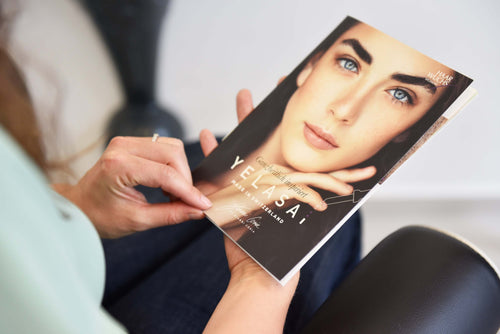
How our hair care products can support those affected by alopecia areata
Alopecia areata can be associated with significant distress for many affected individuals, as changes to the hair often directly impact personal well-being. Targeted yet gentle hair care can help improve the feel of the hair and gently support the affected areas.
Our care products are based on natural plant ingredients and are used in carefully developed formulations. Some ingredients have also been studied in research and can help nourish the hair follicles and improve the conditions for hair growth. The goal of our care is to create the most pleasant environment possible for the hair and gently care for the scalp.

Erfahrungsbericht
Pflegeverlauf
Our coordinated care solutions
For those affected, we offer various care concepts tailored to different hair situations. These include, for example, the Starter Kit for Alopecia Areata, which provides an easy introduction to a targeted care routine.
After medical treatments or medication courses, specially tailored sets can also be beneficial. For shorter hair, the Hair Care Set for Alopecia Areata – After Medication for Short Hair is suitable, while the Hair Care Set for Alopecia Areata – After Medication for Long Hair is specifically tailored to longer hair. Additionally, our Scalp Oil can be used to gently nourish the scalp and provide additional support to the hair follicles.
If you are unsure which form of care is best suited to your situation, you can always contact our hair-growth specialists. There you will receive personal advice and recommendations for care products that are optimally suited to your individual hair situation.

Our conclusion: Promote your natural hair growth with YELASAI hair care products
Alopecia areata (patchy hair loss) can be associated with considerable distress for those affected. Although the exact causes are not yet fully understood, there are care products that are gentle on the scalp and hair and can support natural hair growth. With YELASAI's gentle care products, you can accompany natural hair growth and give your hair more strength and volume. Our products are based exclusively on natural ingredients and deliberately avoid chemicals. Discover our product range and see for yourself the gentle hair care from YELASAI.
