
Diffuse hair loss: symptoms, causes & treatment
With diffuse hair loss, the hair becomes thinner all over the head. Often, those affected who previously had thick hair suddenly notice that the scalp shows through in some places. Diffuse hair loss can occur in both women and men and can have a wide variety of causes.
In this article, we explain how diffuse hair loss can develop, how you can recognise this form of hair loss and how it is diagnosed. At the same time, we discuss how diffuse hair loss can be treated and how our natural hair-care products can be a useful complement.
What is diffuse hair loss?
Learn here what diffuse hair loss means and how it manifests in men and women.
Learn more
What triggers and causes for diffuse hair loss are there?
Find out more about how diffuse hair loss occurs and what causes it can have.
Learn more
How is the diagnosis of diffuse hair loss carried out?
Find out what diagnostic options there are for diffuse hair loss and what the tests look like exactly.
Learn more
How do YELASAI products support you with diffuse hair loss?
Find out what you can do if you have diffuse hair loss and what effect YELASAI products can have.
Learn more
What is meant by diffuse hair loss
Diffuse hair loss is also called Alopecia diffusa, diffuse alopecia or Effluvium diffusum. With this form of hair loss, there is no specific pattern that applies to all those affected.
Rather, the hair loss is distributed across the entire scalp area. The hair becomes thinner overall and isolated sparse areas can develop. In some people, the hair volume decreases so much that the scalp shows through.
As a rule, healthy people lose up to 100 hairs per day. If significantly more hairs are lost per day over several weeks, the hair loss could be related to an illness. With diffuse hair loss, even several hundred hairs per day can fall out.
It is divided into two different forms:
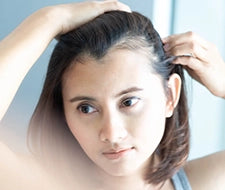
Telogen Effluvium
The hair enters the shedding phase prematurely and no longer grows long enough. This often occurs three to four months after the triggering event. This type of diffuse hair loss is the most common.
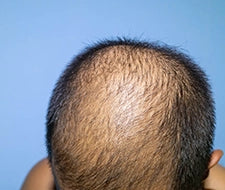
Anagen effluvium
This is an acute hair loss. The hair falls out during the growth phase. As a result, those affected often lose a lot of hair in a short period of time.
In which phases does head hair grow?
The two forms of diffuse hair loss differ in which phase of the hair cycle they fall out. To explain this more simply, we'll first show you the phases in which scalp hair grows:

Anagen phase
This transition phase lasts about two weeks. During this time, the hair stops growing while the hair roots and papillae shrink.

Catagen phase
This is followed by the resting and shedding phase. Over a period of about two to four months, the hair falls out.
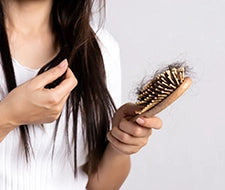
Telogen phase
This is followed by the rest and down phase. The hair falls out over a period of around two to four months.
Whether it is telogen or anagen effluvium depends on which phase the hair falls out. In telogen effluvium, the hair falls out increasingly during the shedding phase. Anagen effluvium, the acute form of hair loss, is different. In this case, the hair falls out already during the anagen phase, i.e. the growth phase. This is why this form leads to very rapid loss of scalp hair.
What are the symptoms of diffuse hair loss in women?
Diffuse hair loss in women can be difficult to recognise. Especially with long hair, it is not easy to judge whether the number of falling hairs exceeds 100 or not. A few long hairs in the brush can already look like a lot.
Many affected women report that suddenly and without any apparent reason significantly more hair falls out than before. Within a few weeks, the scalp becomes visible and the symptoms become clearly noticeable. Diffuse hair loss in women is usually reversible.
This means that hair growth can normalise again once the cause of diffuse hair loss has been identified and addressed. Looking at diffuse hair loss before and after, it becomes clear in many cases that the hair even grows back significantly denser than before.
Erfahrungsbericht
Pflegeverlauf
Frequency of diffuse hair loss in women
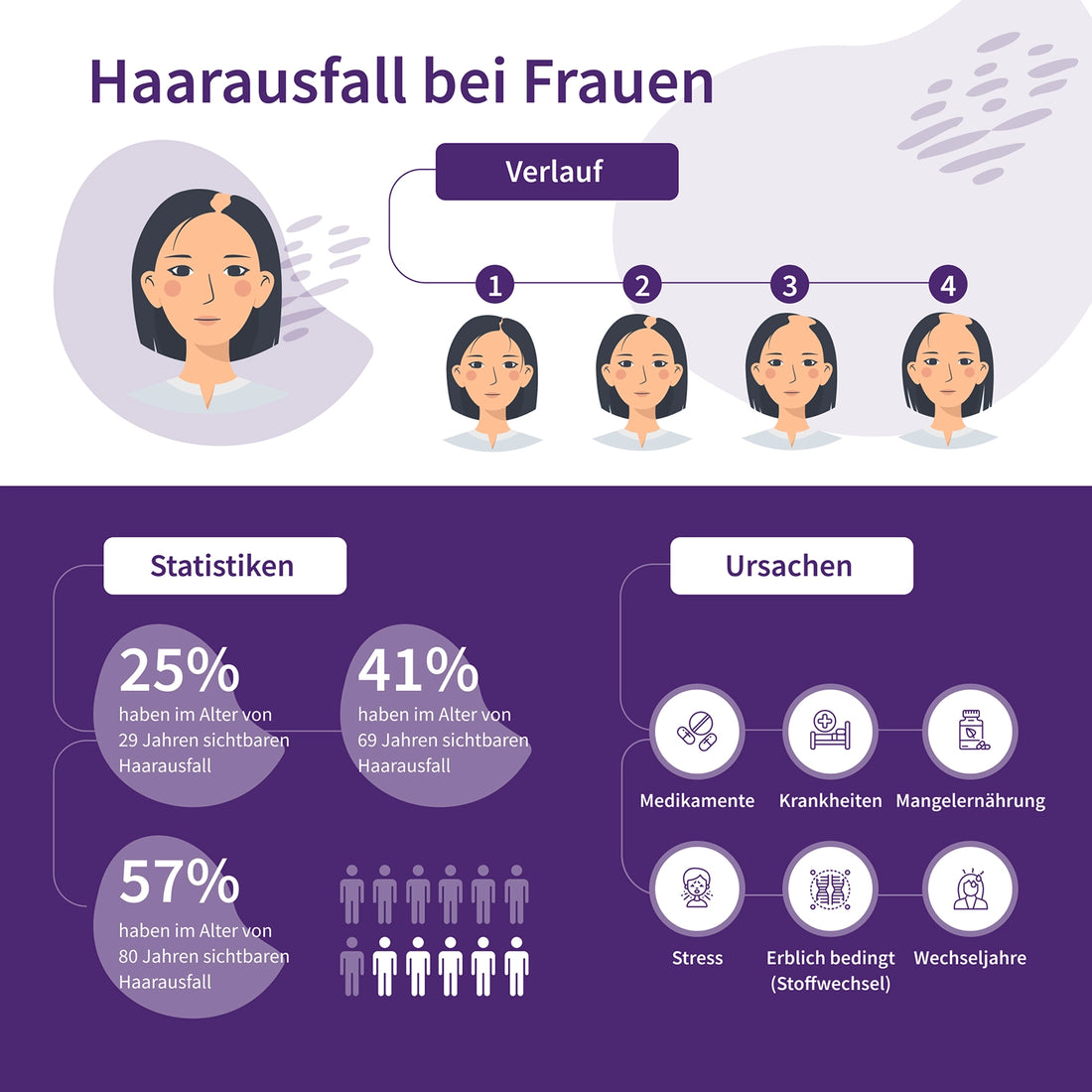
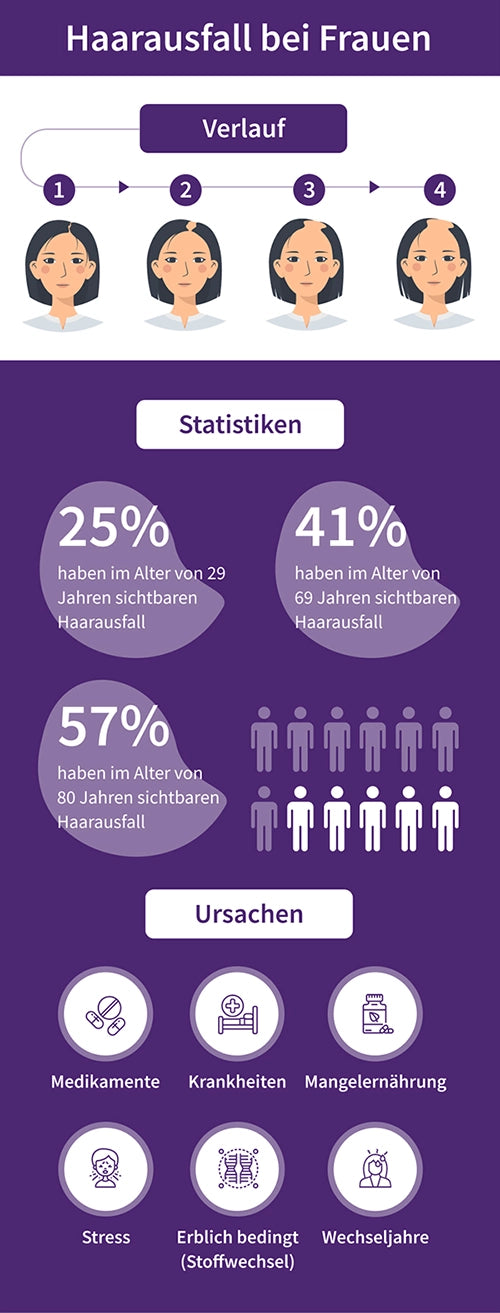
Studies show that diffuse hair loss occurs significantly more often in women than in men. This is partly because women are more frequently affected by the factors that trigger diffuse hair loss. As a result, women suffer 10 times more often from diffuse hair loss.
How does diffuse hair loss occur in men?
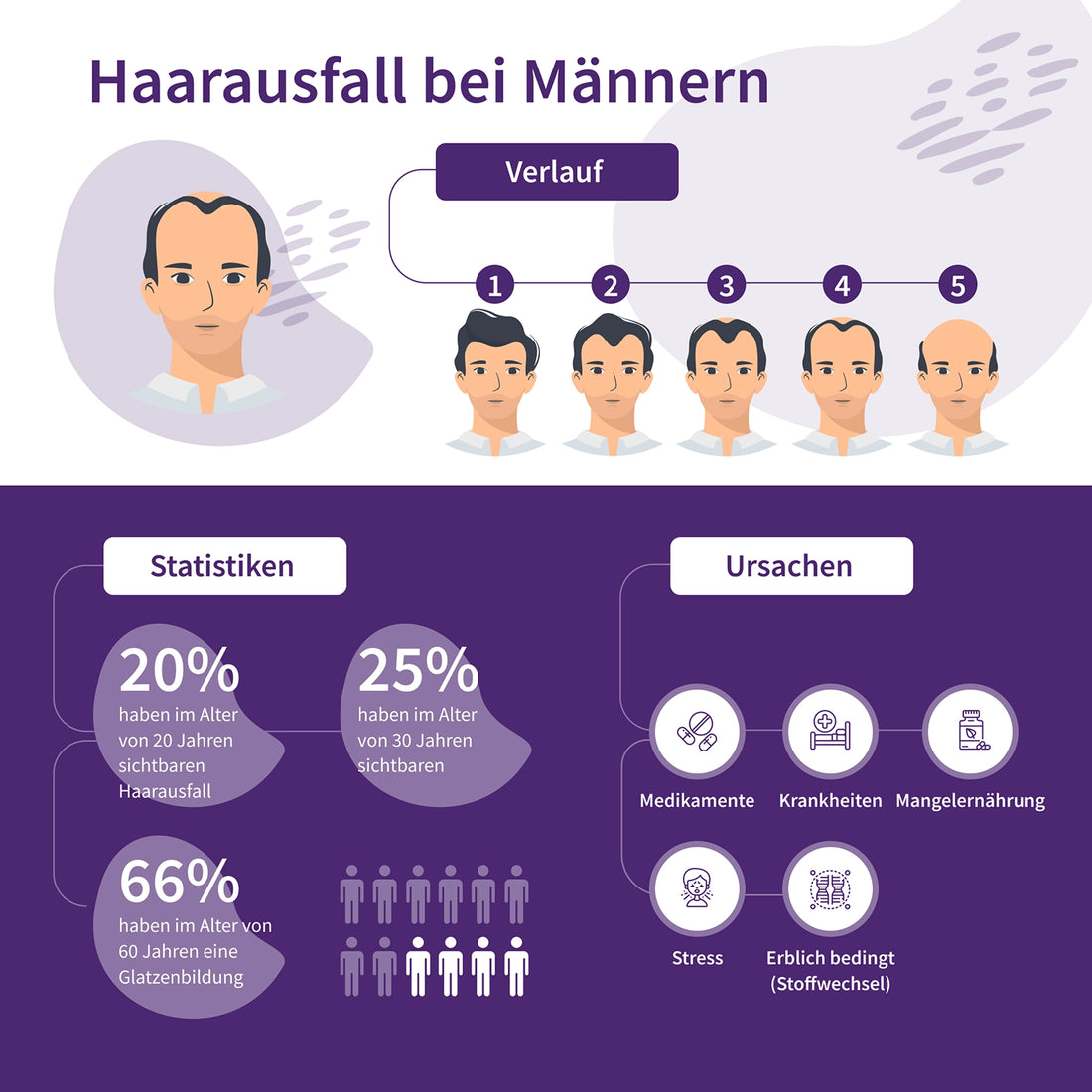
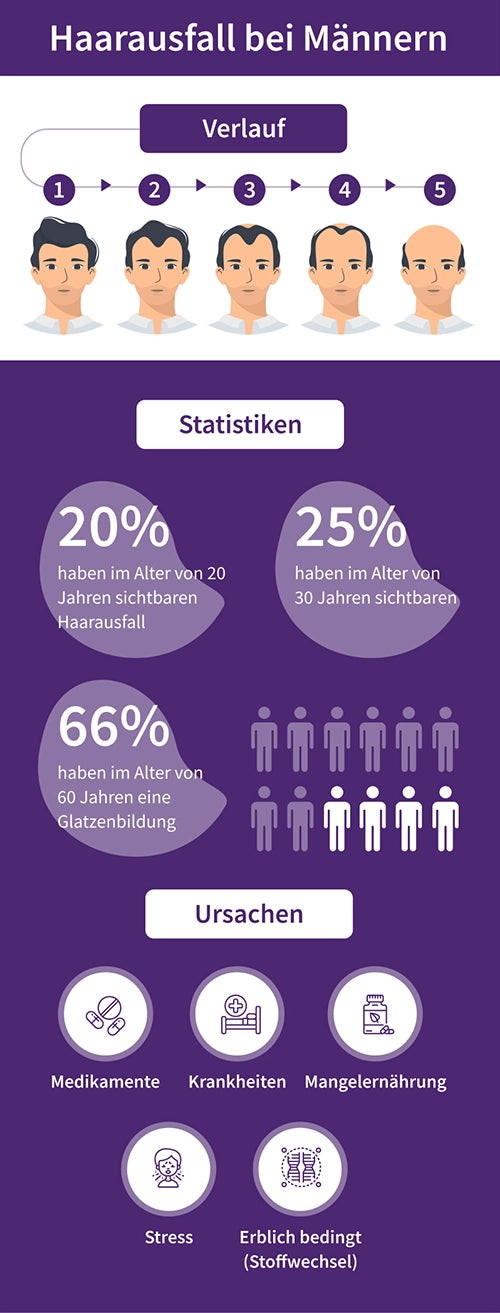
The symptoms of diffuse hair loss are similar in men and women. Sudden strong hair loss and thinning occur. Receding hairline develops and the scalp shows through. Nevertheless, diffuse hair loss in men and women does not follow a common pattern.
In men, this form of hair loss also does not lead to complete hair loss and is reversible. Once the cause is addressed, the hair starts growing again. In men too, diffuse hair loss can lead to a change in hair structure before and after.
What causes diffuse hair loss?
If you notice that you are losing more and more hair, then you should identify the cause of the hair loss. Diffuse hair loss can have a wide variety of triggers that need to be recognized and eliminated. You can consult a hair growth specialist and if you think an illness could be the cause, consult a doctor.
We summarize the most common causes of diffuse hair loss in women and men for you:

Hormonal fluctuations
Women in particular are sometimes subject to strong hormonal fluctuations during their lives. These include puberty, pregnancy, stopping the pill or menopause. All of these can lead to diffuse hair loss. A thyroid disorder such as underactive or overactive thyroid can also promote diffuse hair loss.

Nutrient and vitamin deficiency
The cause of hair loss can also be insufficient nutrient supply. At risk are, for example, pregnant women, athletes, people with eating disorders or vegetarians and vegans. Particularly common is iron deficiency. Therefore, it is important to keep an eye on nutrition.

Poisonings
Heavy metal poisoning can trigger diffuse hair loss. Even though these cases are quite rare, you should be aware of the danger. Particularly dangerous are, for example, mercury and cadmium.

Side effect of medication
If you are taking a new medication, hair loss could be a side effect of it. Since your hair only falls out two to three months later, diagnosis can sometimes be difficult. Triggers can include taking blood thinners, antidepressants or antiepileptic drugs.

chemotherapy
During chemotherapy or radiation, cell growth is slowed down. This also affects the hair, as the growth phase is inhibited.

Stress
Stressful phases can also lead to diffuse hair loss. The exact cause is not yet known – however, research sees a connection between inflammatory substances released during stress and hair loss.
It can take some time until the cause of hair loss is found. This is mainly because there can be so many different triggers: some of them are obvious, others are not.
The cause should therefore first be clarified medically. Through diagnostics, problems such as an underactive thyroid, nutrient deficiency or an imbalance in the hormonal system can be identified and treated.




How is diffuse hair loss diagnosed?
There are various tests that can detect diffuse hair loss. These include a pull test, in which a doctor pulls on a strand of hair with about ten hairs. If more than three to four hairs fall out, this is an indication of excessive hair loss.
A similar test for diagnosing hair loss in men or women is the trichogram. In this test, 50 to 100 hairs are plucked out and examined under a microscope. Blood tests and a urine sample are also common methods for diagnosing diffuse hair loss.
Erfahrungsbericht
Pflegeverlauf
Do I need a medical diagnosis?
If a disease is the cause behind diffuse hair loss, you should be treated by a doctor. In case of deficiency symptoms, high-dose dietary supplements can be taken after medical consultation. In case of medication side effects, an alternative can be sought.

How our hair care products can support with diffuse hair loss
Diffuse hair loss is a major burden for those affected. If you have already spoken with a doctor and know the cause, you can use our hair care products as additional support.
Our high-quality products are based on natural ingredients that care for hair and scalp equally. This can support hair growth and cover sparse areas with more volume.
For daily hair care, you can rely on our scalp shampoo for hair loss, which gently cleanses the scalp. In combination with the clinically tested hair tonic, which gently supports the hair roots and hair cells, the appearance can change with regular use.
Erfahrungsbericht
Pflegeverlauf
Care from inside and outside
To strengthen the hair from within, you can also use our dietary supplements for hair loss for diffuse hair loss. These provide the body with, for example, zinc, biotin, selenium and valuable plant substances. The nutrients can contribute to maintaining normal hair.
If you are unsure, you are welcome to contact our hair experts. There you can expect professional care advice including specific product recommendations for your scalp care and hair situation.


Frequent Questions About Diffuse Hair Loss
Further information and answers to frequently asked questions on the topic of diffuse hair loss can be found here:
Diffuse hair loss leads to an even thinning of the hair all over the head, without a specific pattern. The hair becomes thinner and the scalp can show through.
Diffuse hair loss can be triggered by hormonal fluctuations, stress, nutrient deficiencies, poisoning, medication, or chemotherapy. Hereditary hair loss can also be a contributing factor.
Doctors use tests such as the pull test, trichograms, or blood and urine analyses to determine the cause and provide targeted treatment.
Yes, once the cause is identified, hair growth can often be normalized again. Our hair care products can also strengthen the hair's feel and support its volume.
